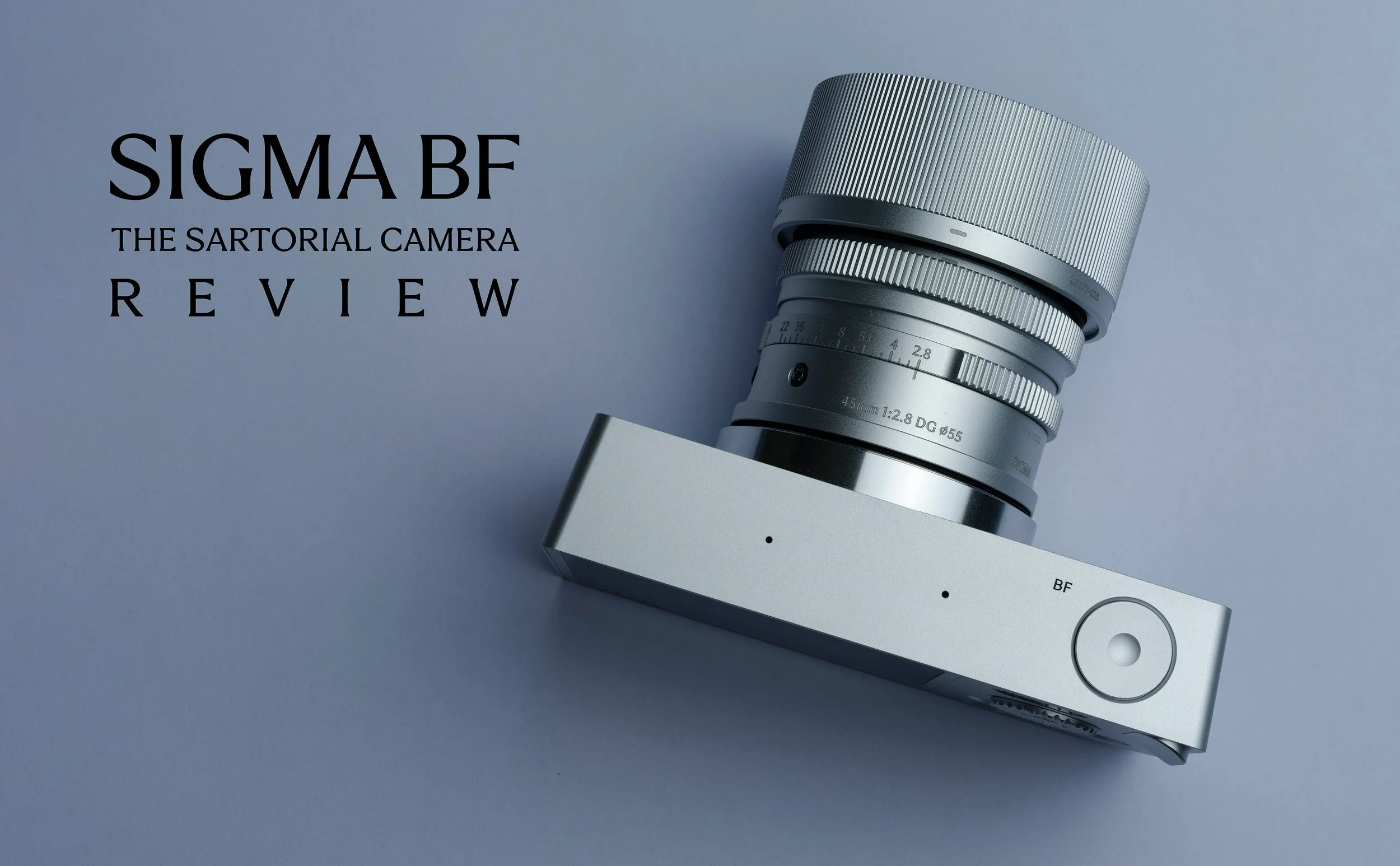
Sigma BF: The Beauty of a Camera That Refuses to Do It All
Kindly loaned to me for a month by Sigma Deutschland, the Sigma BF accompanied me to Paris, Vienna, Munich and the French Atlantic coast. Street photography, night scenes, architecture, travel and even product photography under continuous lighting: I used it in a remarkably wide range of situations. Yet the BF does not lend itself easily to a conventional camera review. To understand it, one must first accept its philosophy: that of a deliberately different camera, one that values simplicity, pleasure and the beauty of the object over an ever-expanding list of features.
This Is No Ordinary Review
It should be said from the outset: this is not a conventional camera review.
Not because the Sigma BF is beyond criticism, but because assessing it solely through a checklist of features would mean missing the point entirely. The BF was not designed to win the race for the greatest number of buttons, customisable modes or electronic assistance systems. It is not trying to become the one camera capable of satisfying every photographer, in every situation, with every conceivable setting.
Should your priority be a camera body that can do absolutely everything—with an electronic viewfinder, an articulated screen, in-body stabilisation, several configurable control dials and a multitude of shortcuts—you would probably be better served by a Sony Alpha or another similarly versatile mirrorless system.
The Sigma BF is pursuing something else.
Here, what prevails is almost a sartorial sensibility: an emphasis on materials, proportions, touch and gesture. The BF attempts to combine the beauty of an object with genuine image quality, without the complexity of a digital camera that has gradually evolved into a kind of electronic Swiss Army knife.
One does not choose a bespoke suit because it has more pockets than a technical jacket. One chooses it for its cut, its fabric, the way it hangs and the pleasure of wearing it. The Sigma BF follows much the same logic.
It is intended for the knowledgeable enthusiast or professional photographer who wants to document the world while taking pleasure in handling a beautiful object. For someone who genuinely loves photography, yet has no desire to use a phone as a camera. And for anyone who believes that the photographic experience begins before the shutter button is even pressed.
A Camera That Leaves No One Indifferent
I have never been stopped in the street so often because of a camera.
In Paris, Vienna and Munich, the same questions kept returning:
— “Wow, is that the BF? Is it any good?”
Or, from passers-by who did not appear to have any particular interest in photographic equipment:
— “That’s beautiful. What is it? A camera?”
The reactions came both from photographers who already knew the model and from people who were simply intrigued by this metallic object with its unusual lines. The BF attracts attention without attempting to imitate a vintage camera, and without adopting the sometimes aggressive design language of contemporary professional equipment.
Even my wife, who has little interest in either my photography or technology, could not resist it. She repeatedly remarked on how beautiful the camera was before eventually asking to use it herself. Those who know her will understand just how revealing that anecdote is: the Sigma BF genuinely leaves few people unmoved.
Disclaimer
The camera body used for this article was kindly loaned to me for one month by Sigma Deutschland.
Sigma did not pay me, impose any editorial conditions or exercise any right of approval over my work. The company did not read this article before publication.
One Month of Use Across Europe
During that month, the BF accompanied me to several locations across Europe.
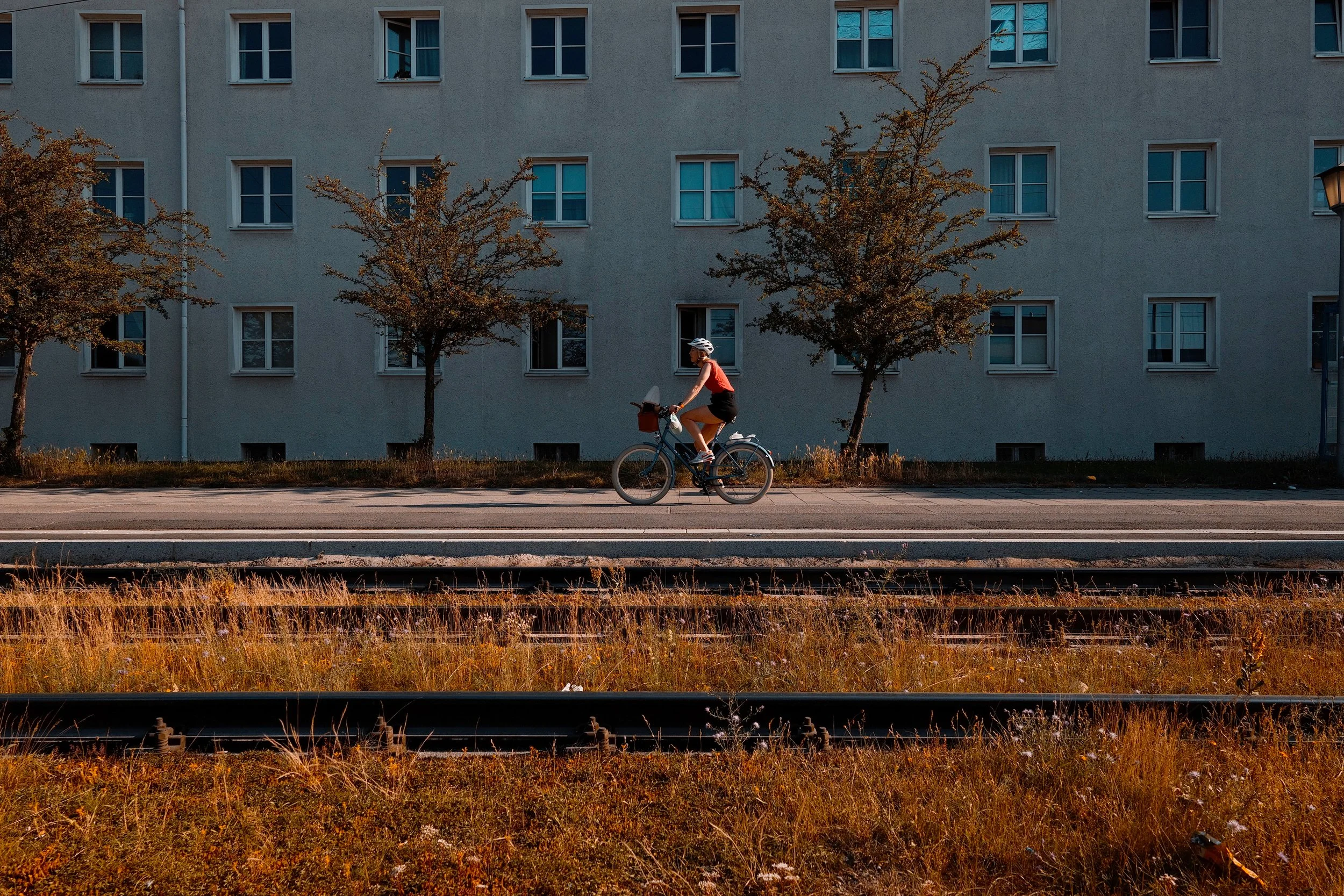
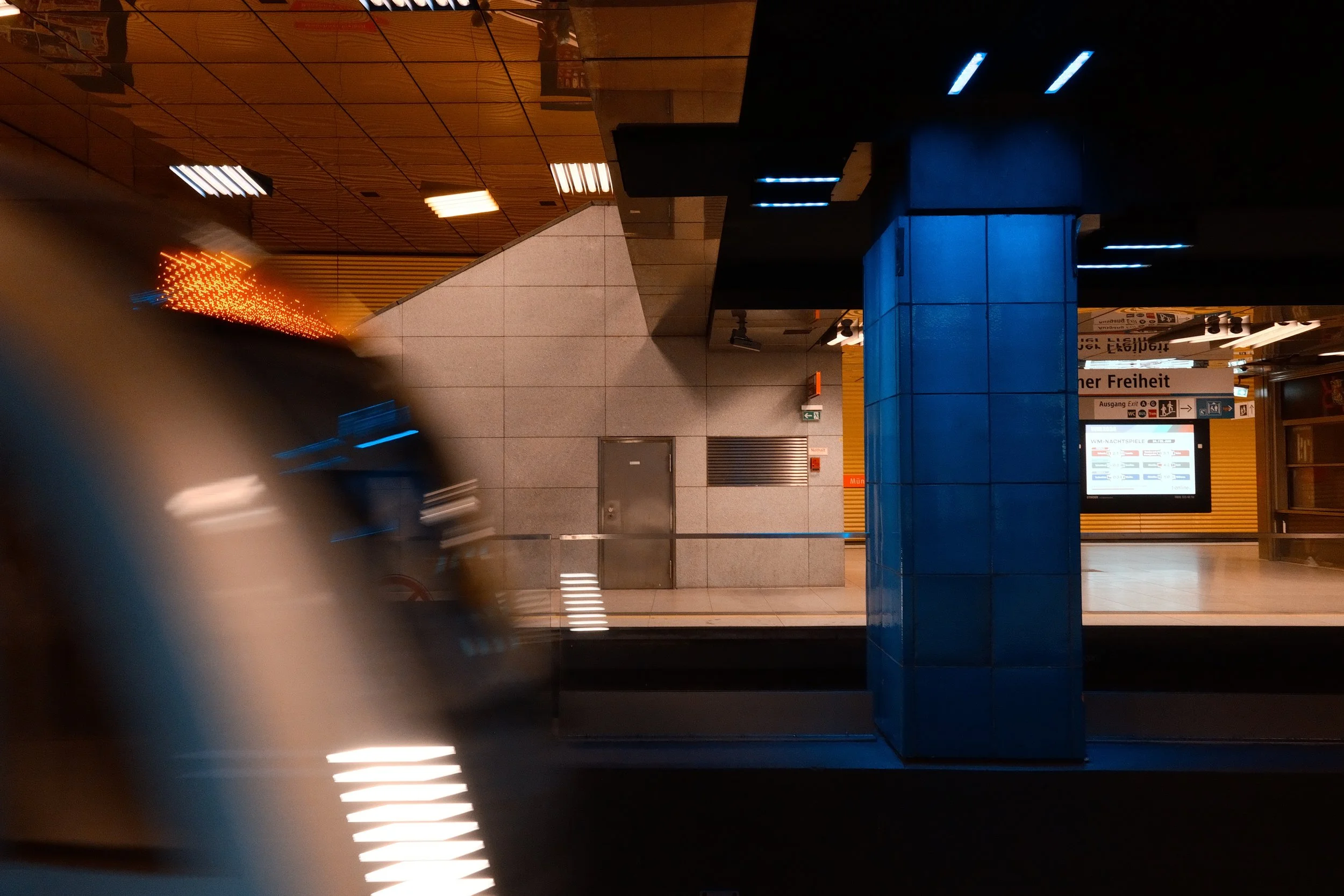
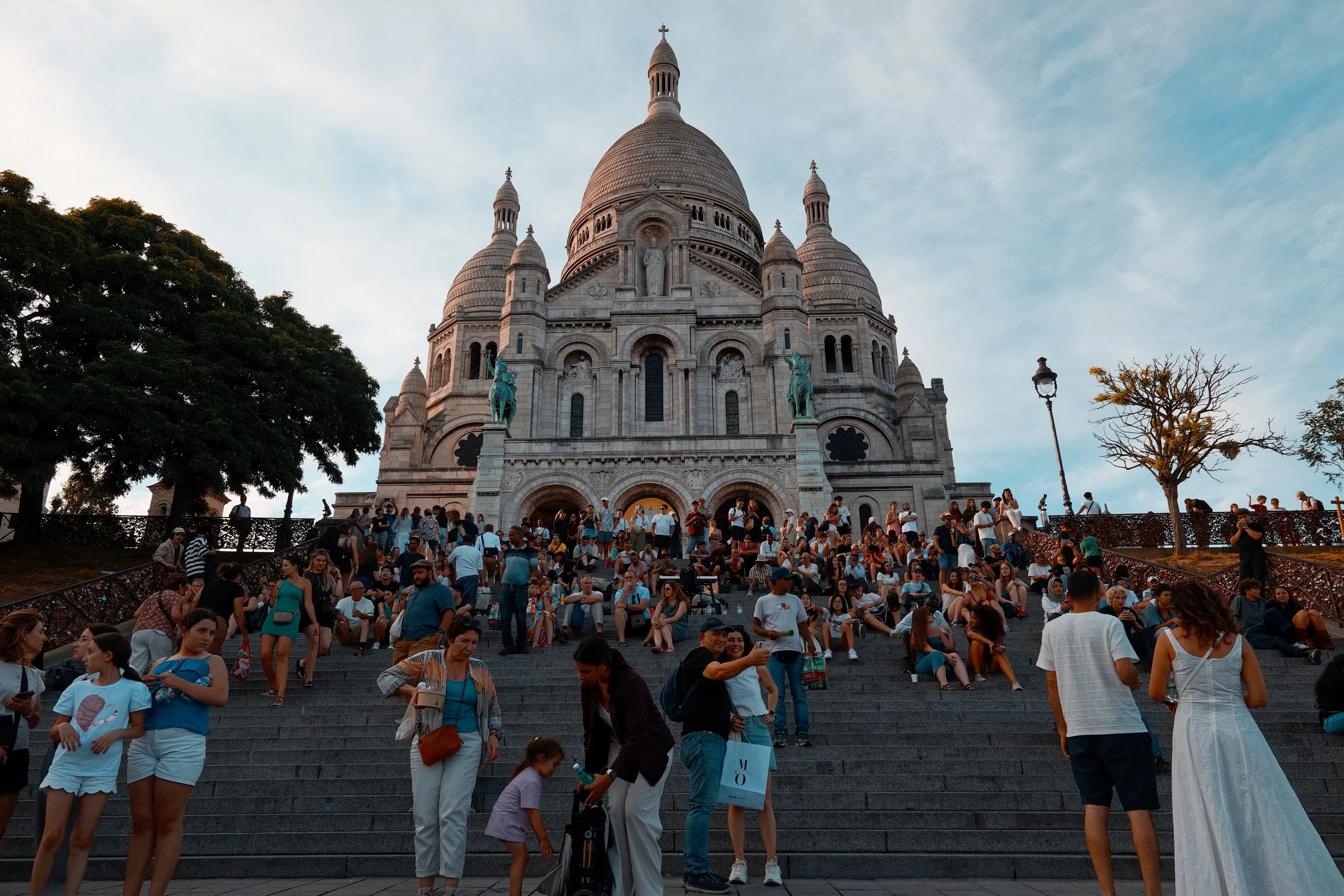
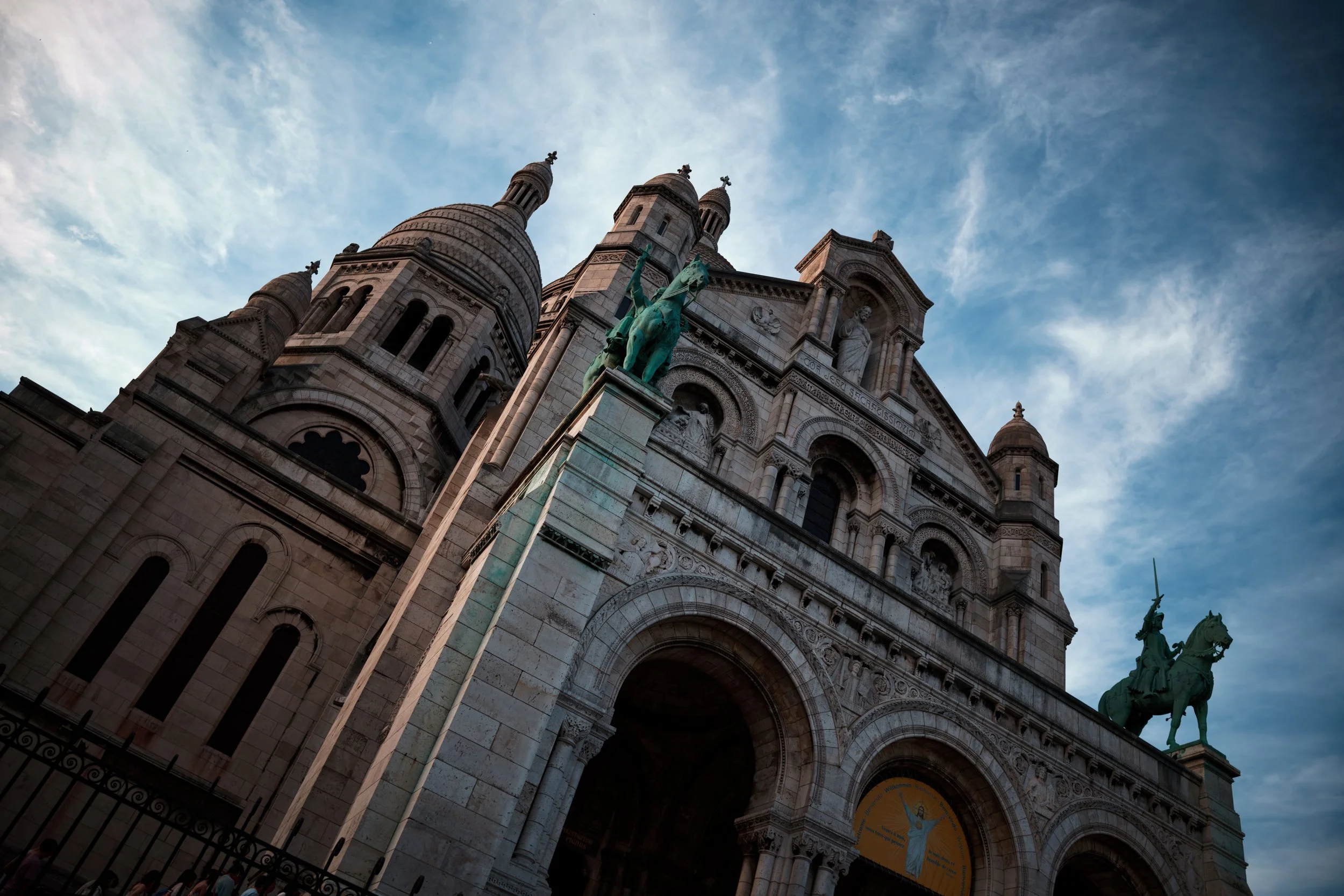
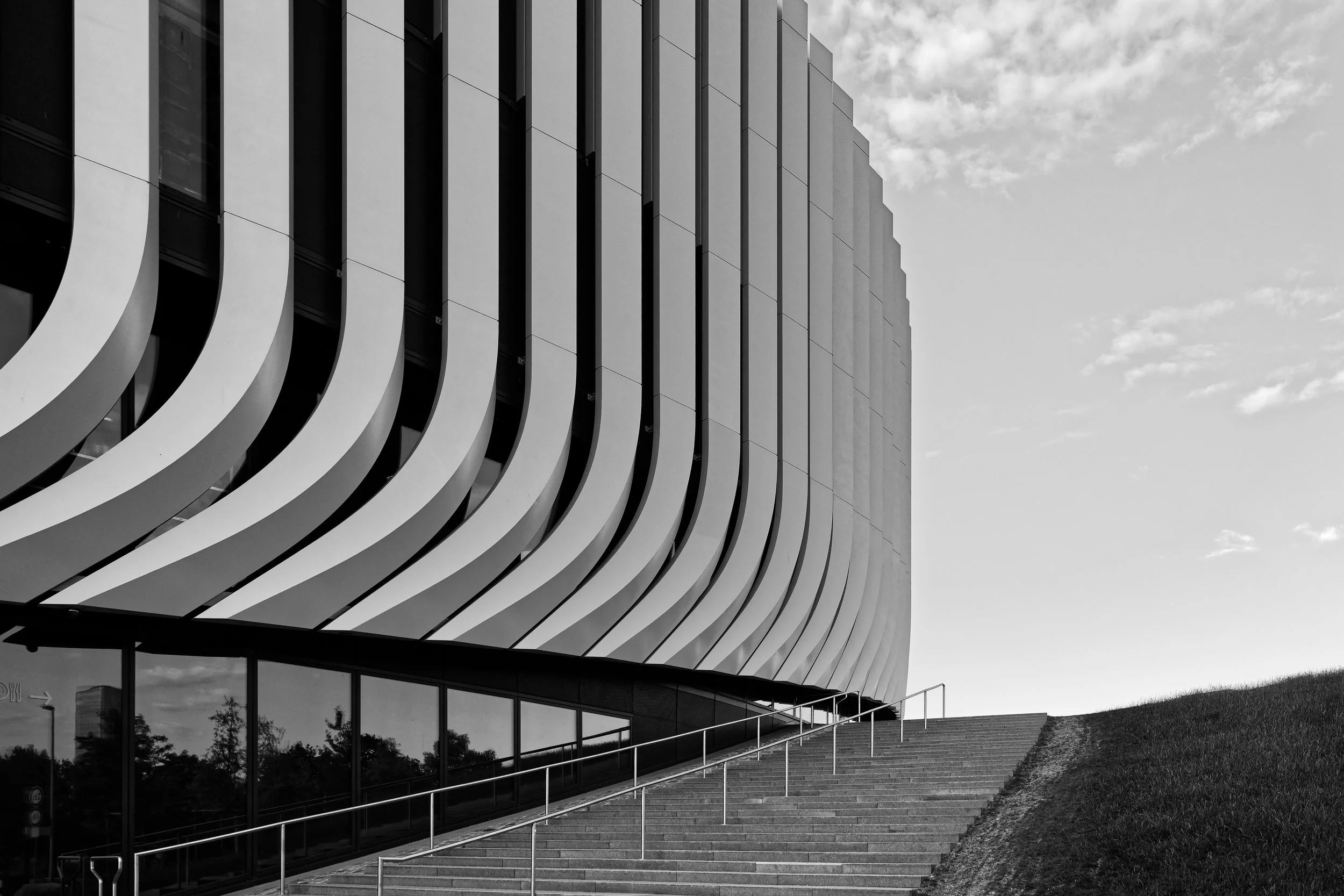
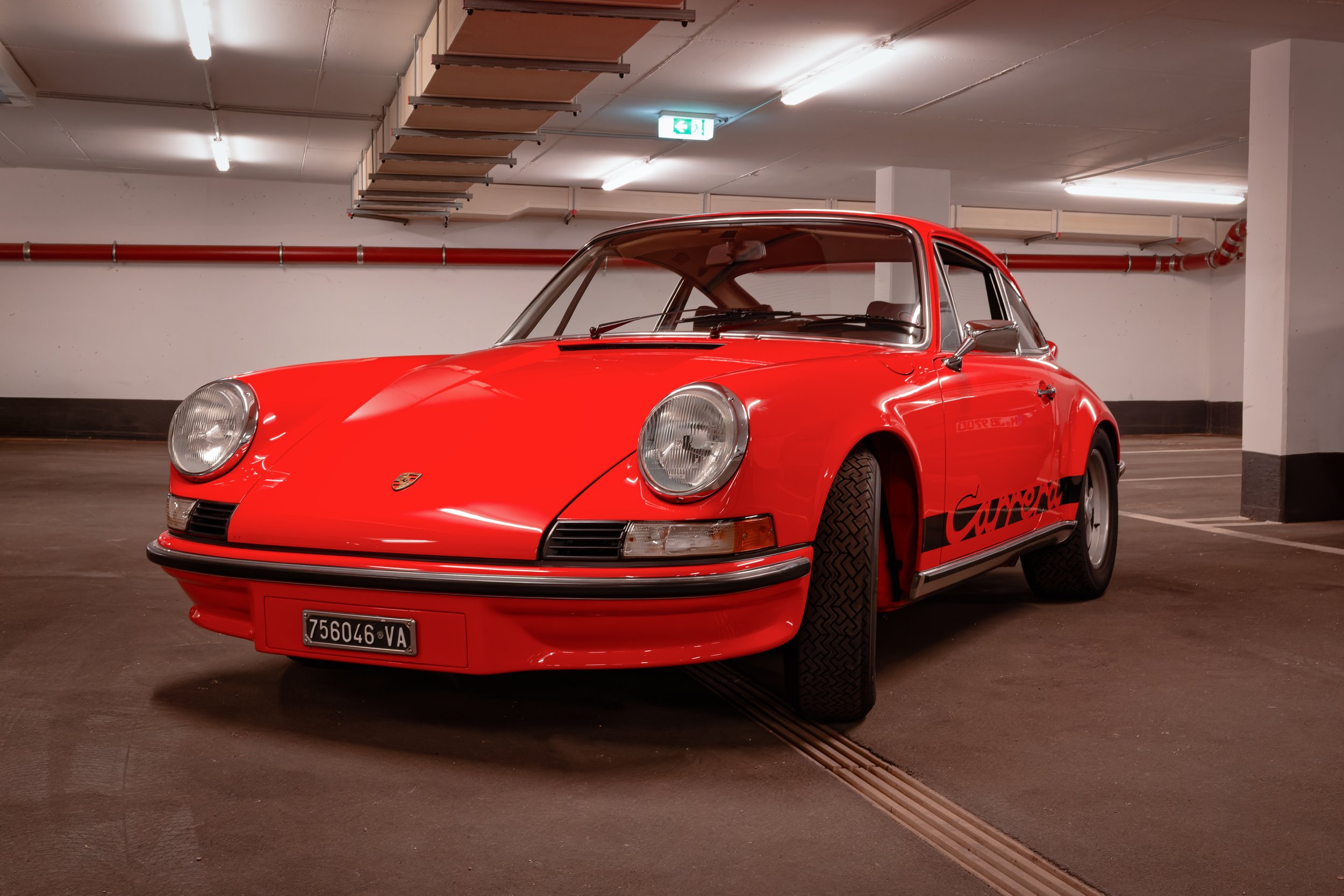
I used it on the streets of Paris, Vienna and Munich, as well as on the French Atlantic coast. It photographed everyday scenes, people, urban landscapes, architecture, interiors, night-time atmospheres and the details I encountered by chance during my travels.
I also used it in a more controlled environment for product photography under continuous lighting. The objective was therefore not simply to determine whether the BF made an enjoyable camera for walking around, but to discover just how far its minimalist concept could be taken.
That month did not convince me that the BF could replace every other camera. Rather, it confirmed that it had never intended to.
A Block of Aluminium Rather Than an Ordinary Camera Body
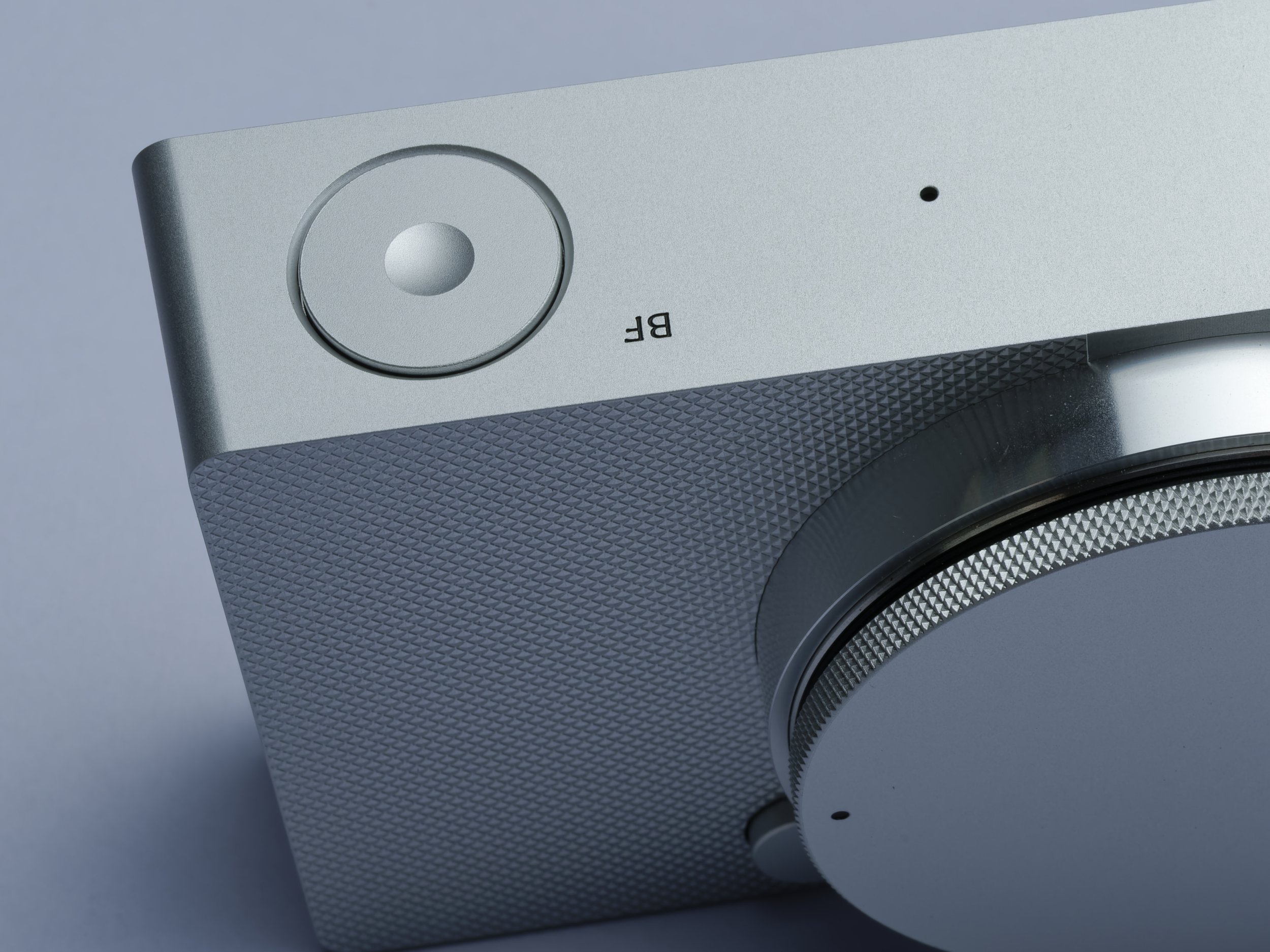
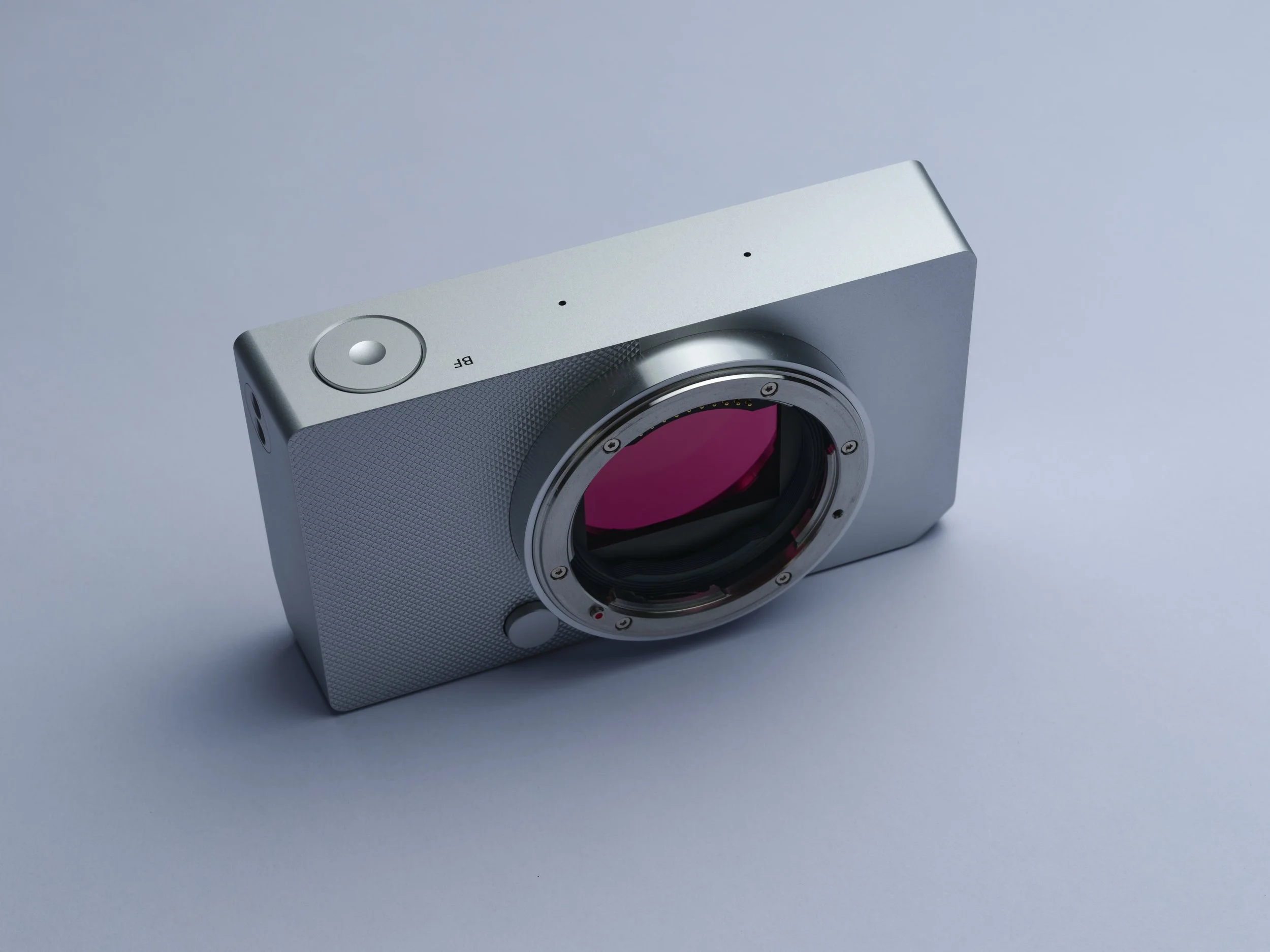
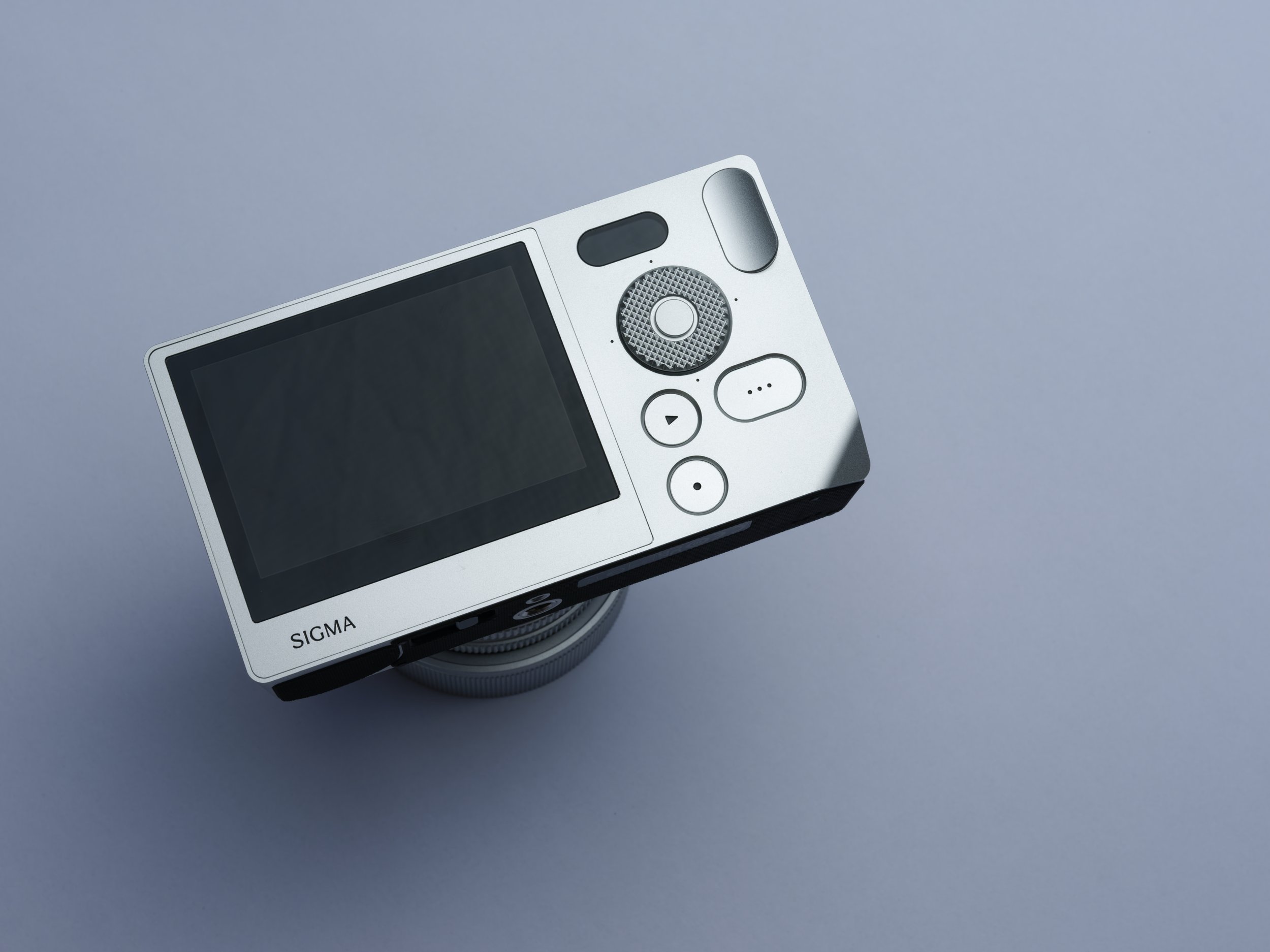
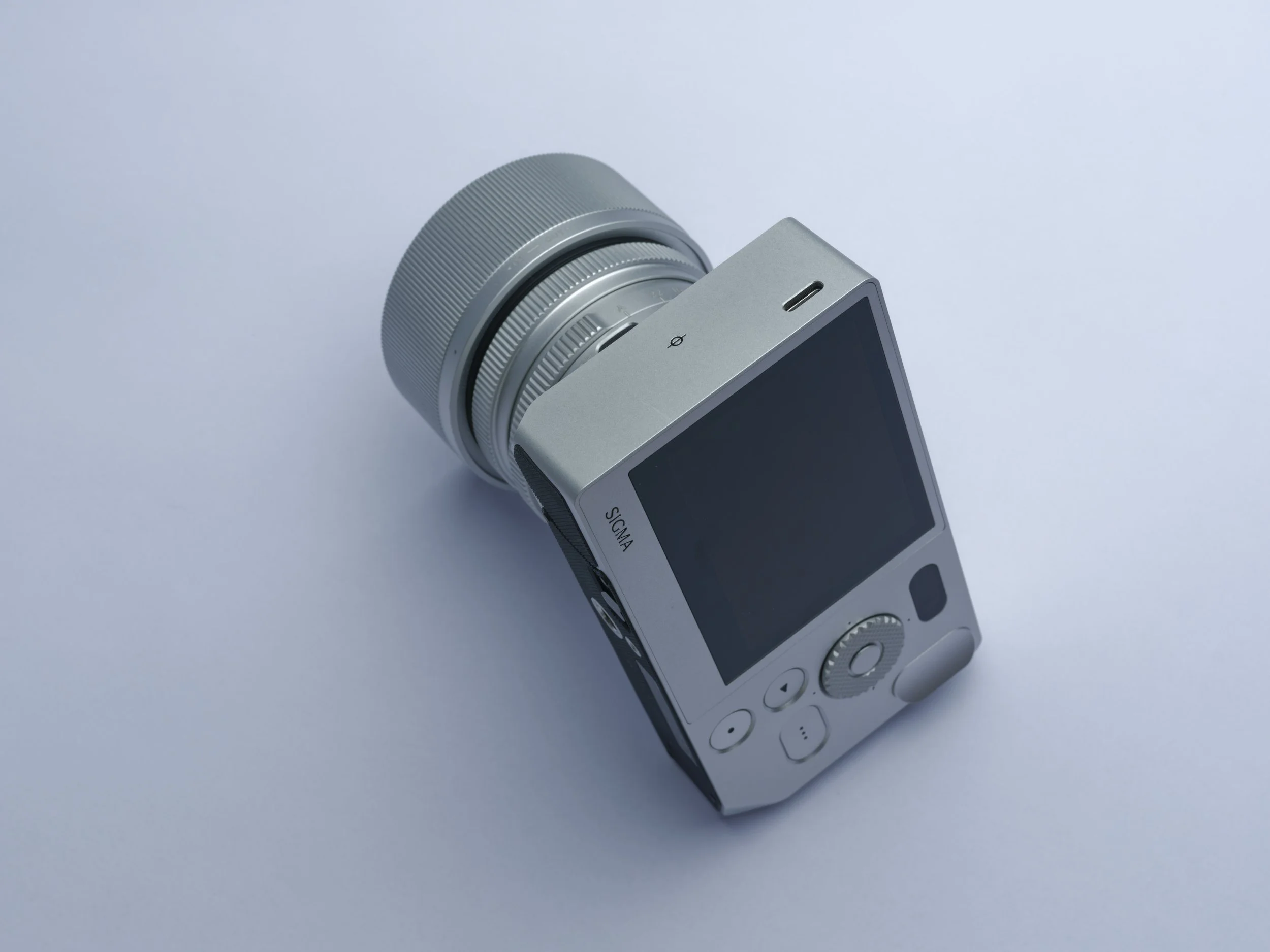
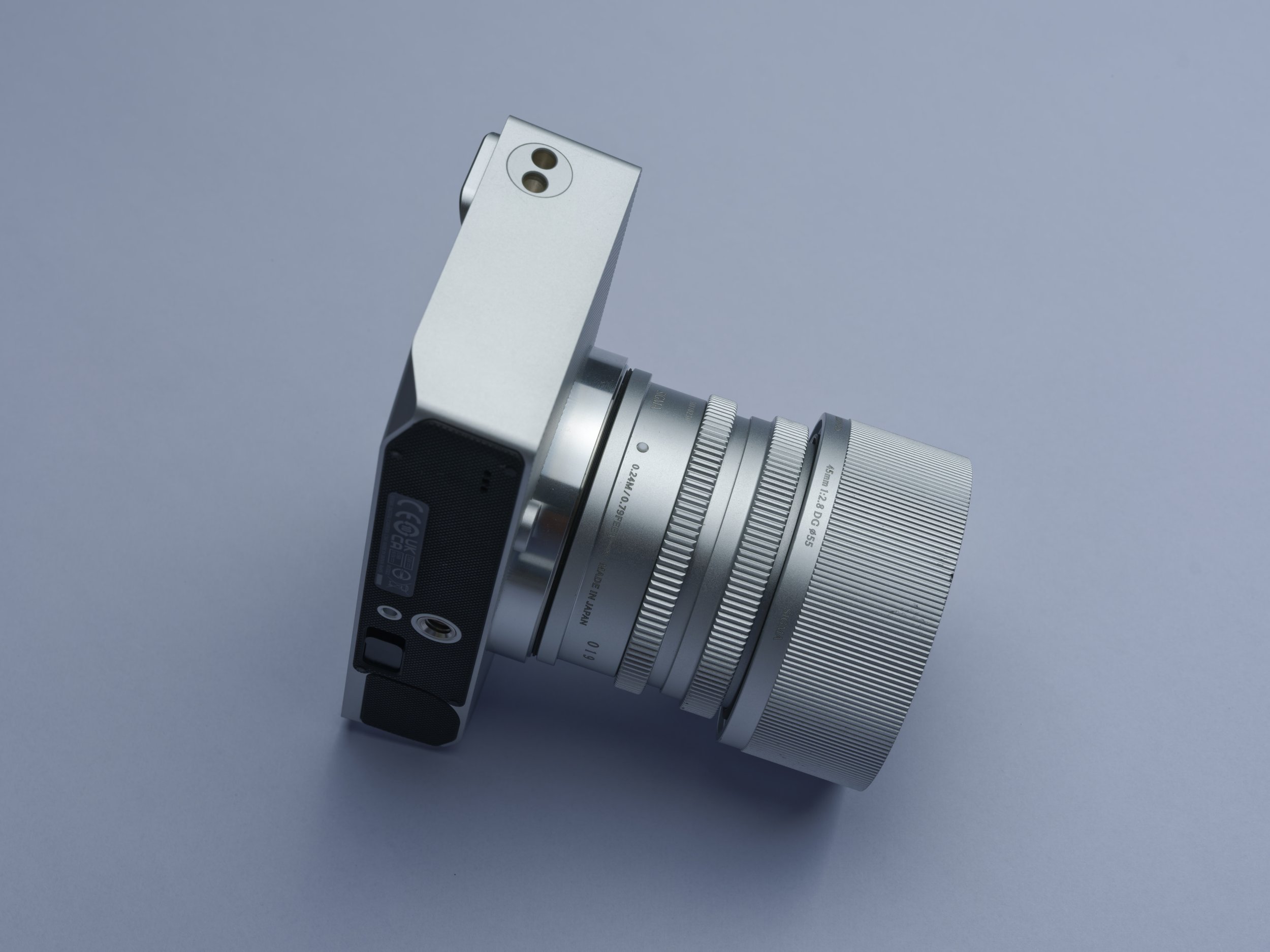
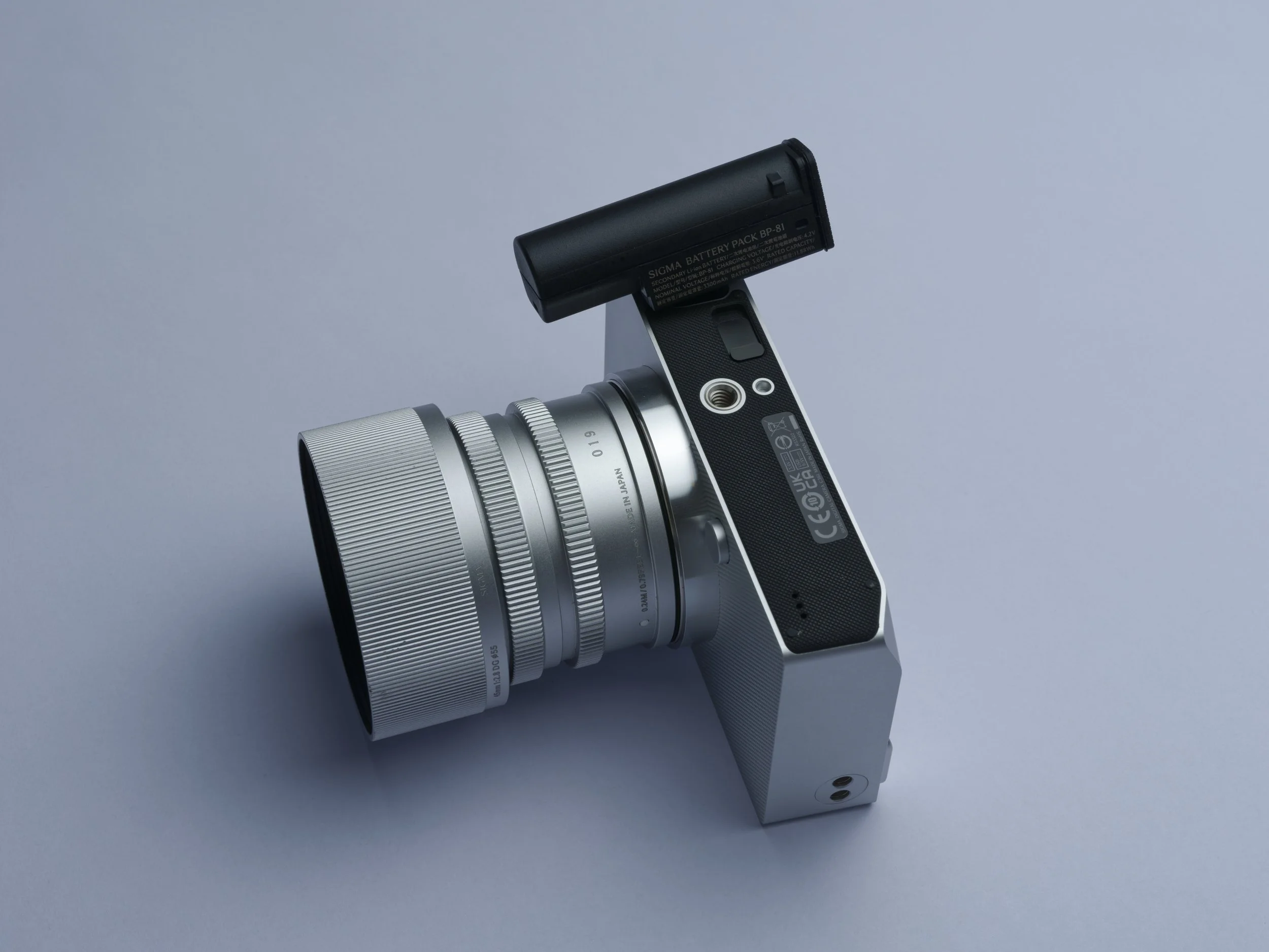
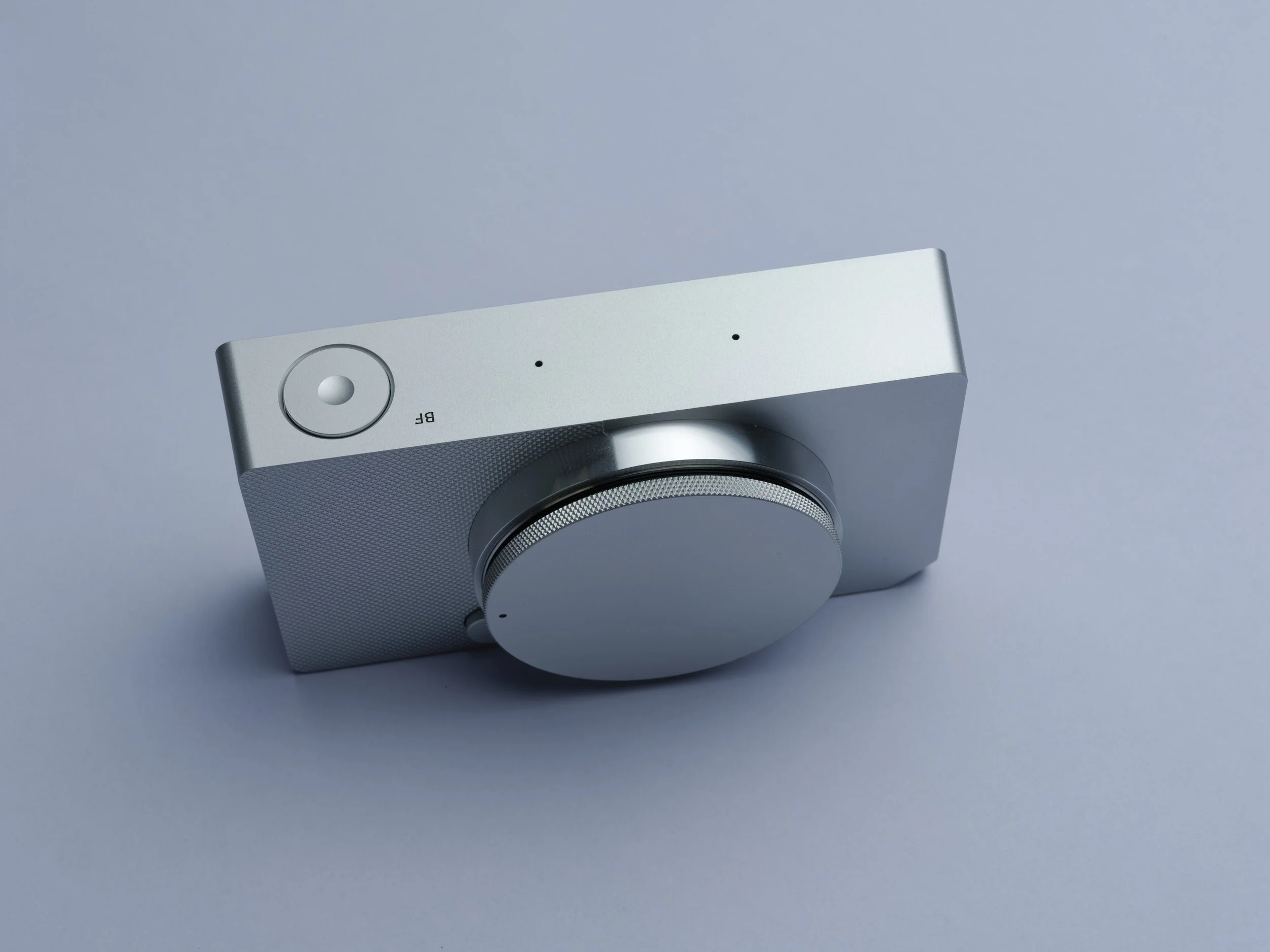
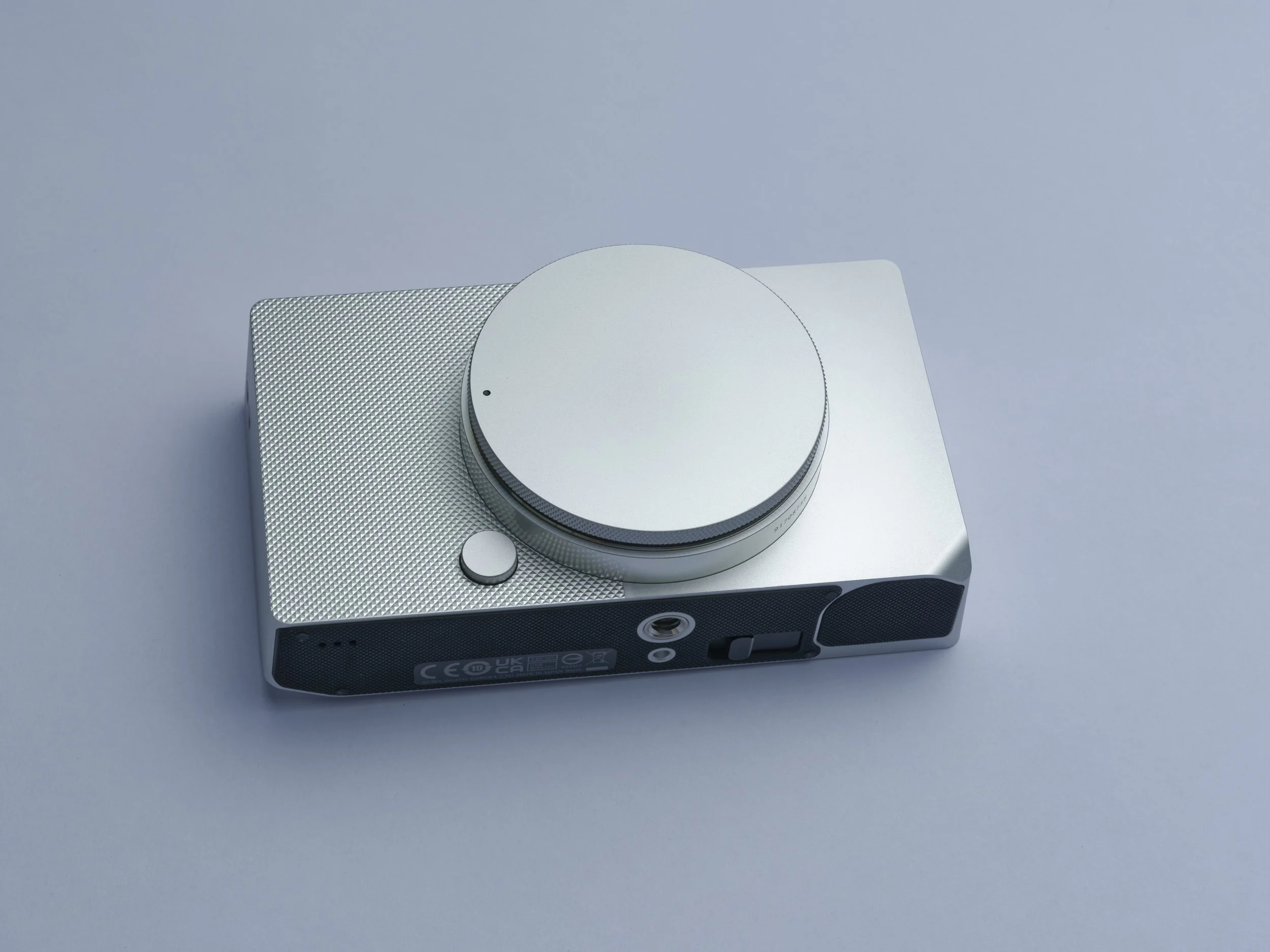
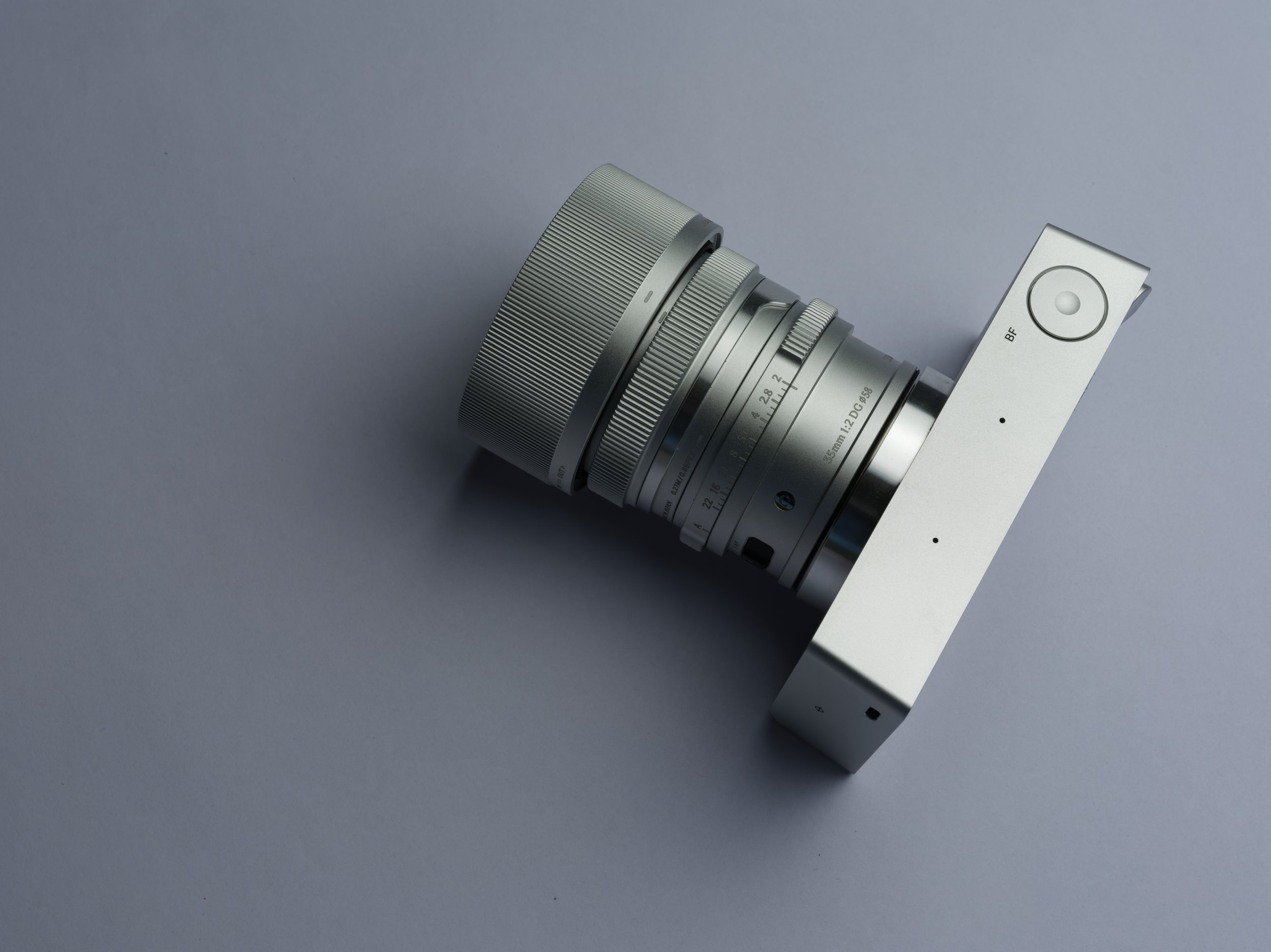
The Sigma BF is built around a true unibody shell, machined from a solid block of aluminium. Sigma states that each chassis requires approximately seven hours of machining. The result is a camera with no visible joins, available in black or silver, that feels more like a precision instrument than a conventional electronic product.
Inside is a 24.6-megapixel backside-illuminated full-frame CMOS sensor paired with the L-Mount. The body measures approximately 130.1 × 72.8 × 36.8 mm and weighs 446 grams with the battery, or 388 grams for the body alone.
The BF therefore has some weight to it. More precisely, it feels surprisingly dense the first time you pick it up. Contrary to some of the comments I have read elsewhere, this never particularly bothered me. I am admittedly accustomed to carrying medium-format camera bodies and lenses, which probably affects my perception, but I find that the BF’s density contributes positively to the experience of using it.
The weight remains manageable, while the sense of solidity is unmistakable. There is nothing hollow or fragile about the BF. Paired with the appropriate lenses, the entire system displays remarkable aesthetic and tactile coherence.
Three I-Series Primes in the Same Spirit
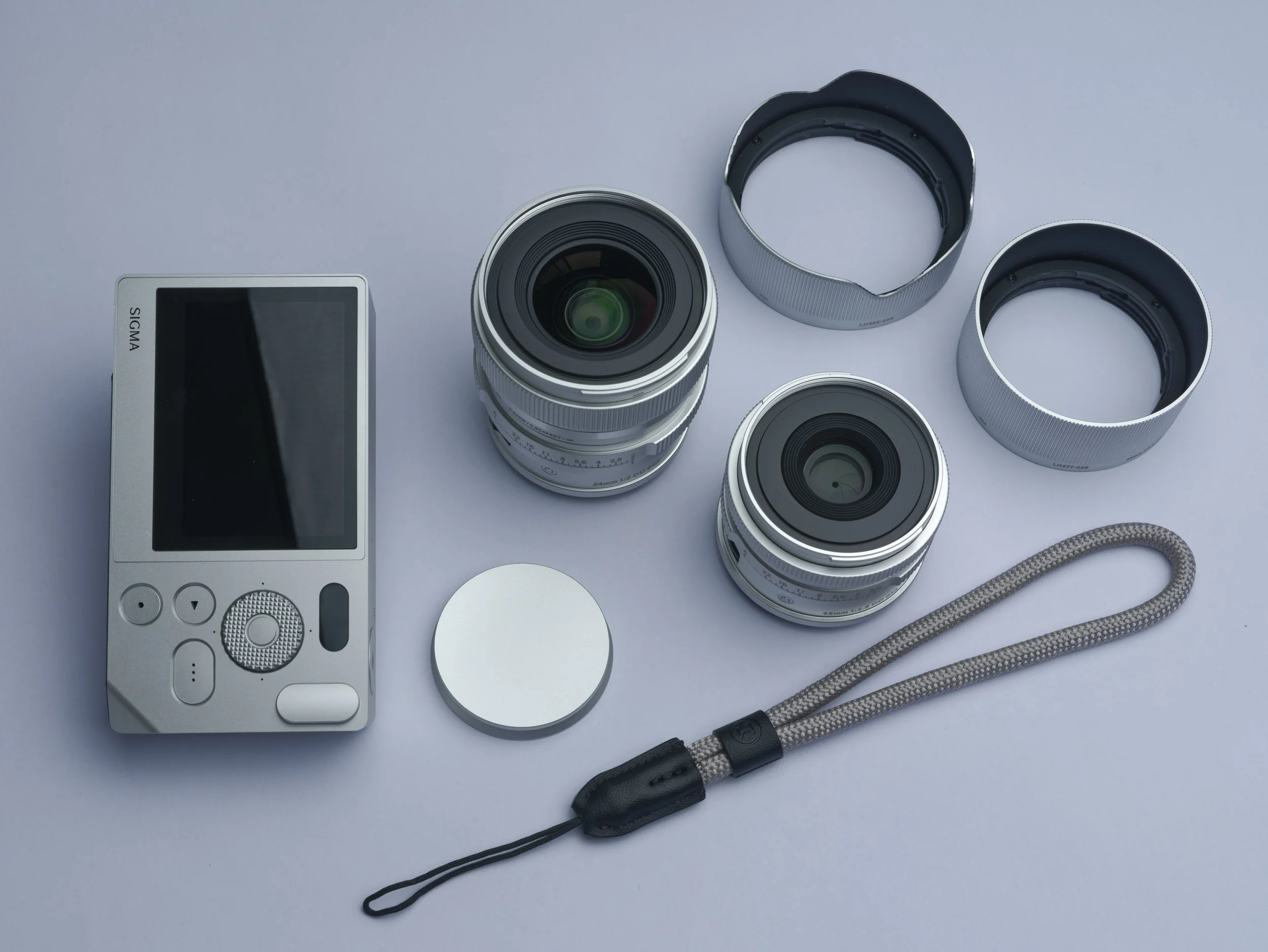
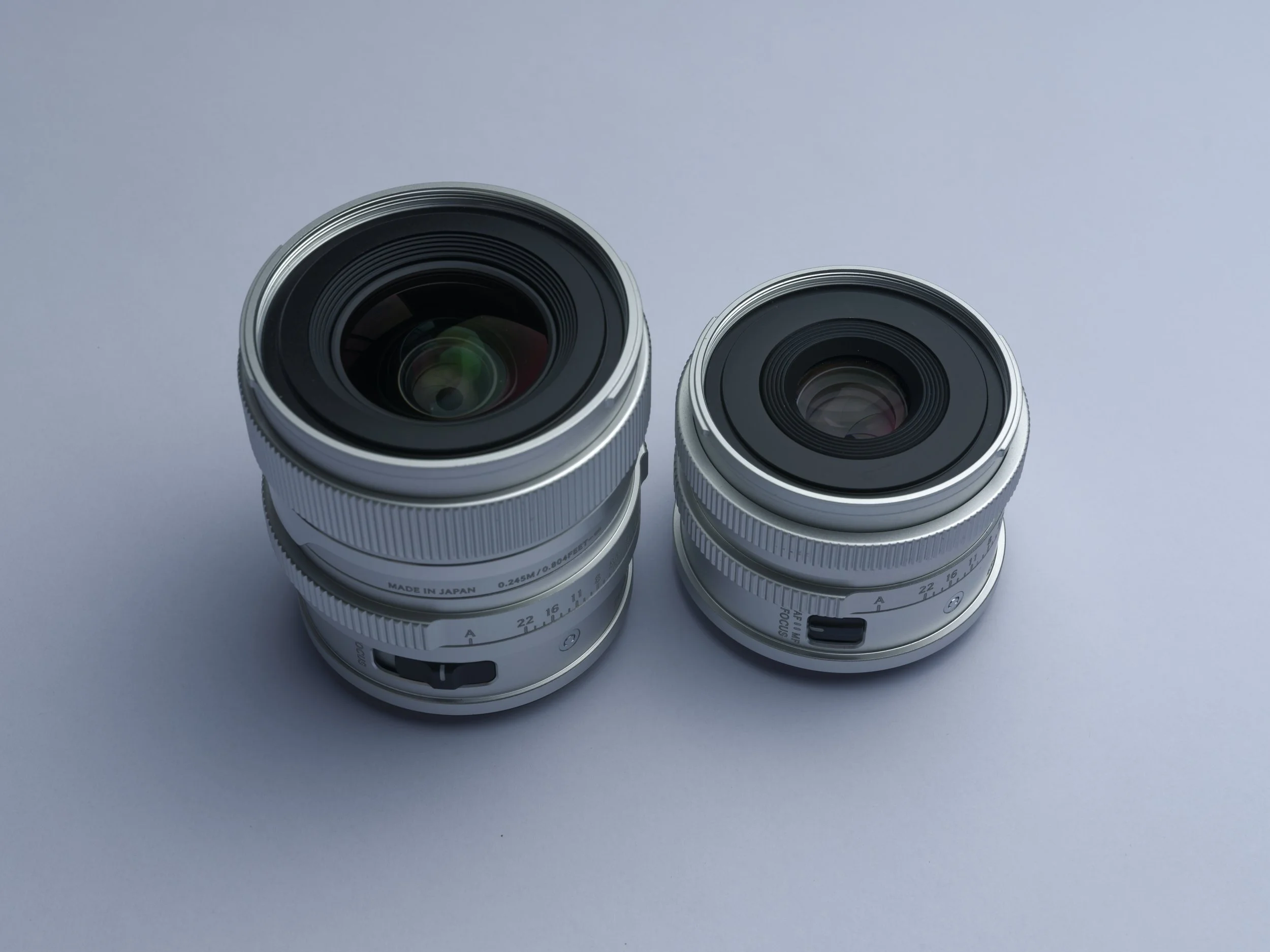
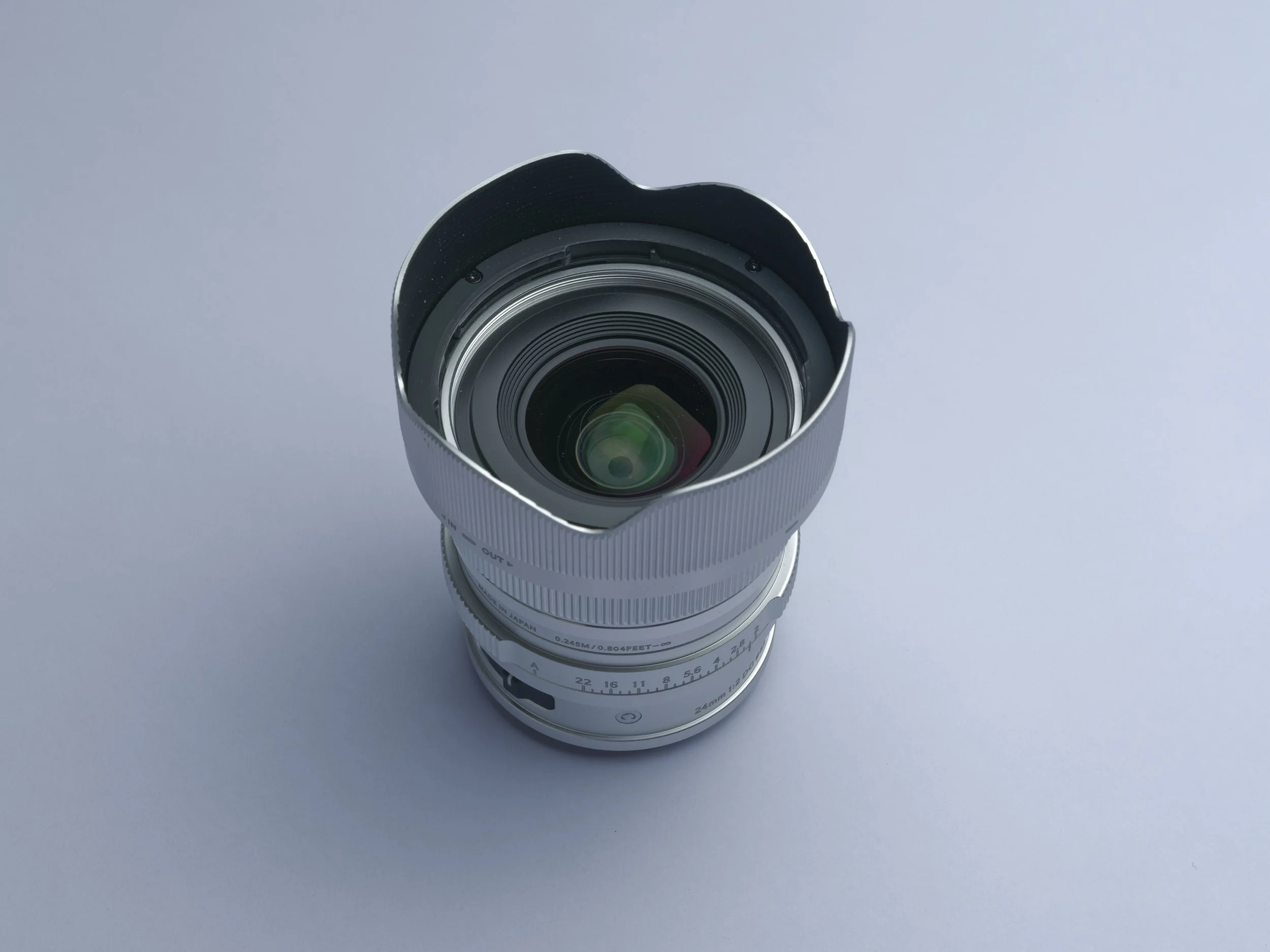
The loan from Sigma Deutschland was not limited to the camera body. I was also able to use three L-Mount prime lenses from the I-Series: the 24mm F2, the 35mm F2 and the 45mm F2.8. All three extend the philosophy of the BF perfectly.
They share beautifully finished metal construction, compact dimensions and a reasonable weight considering their build quality. They are undeniably beautiful, but beauty is not all they offer. Their finish immediately inspires confidence, while their controls provide genuine tactile pleasure. The aperture rings are precise and reassuringly firm without being stiff, with clicks pronounced enough to change the aperture without taking your attention away from the scene.
Together, they form something close to a photographic capsule wardrobe: three focal lengths with distinct personalities, united by the same level of construction and the same aesthetic language. Changing lenses never feels as though it disrupts the balance of the camera. Each one appears to have been designed specifically for it.
In use, all three lenses proved both fast and quiet. Their autofocus complements the BF extremely well, and I never noticed any meaningful slowdown when moving from one lens to another. Whether I was shooting on the street or photographing products under continuous light, focusing remained discreet enough never to distract from the subject.
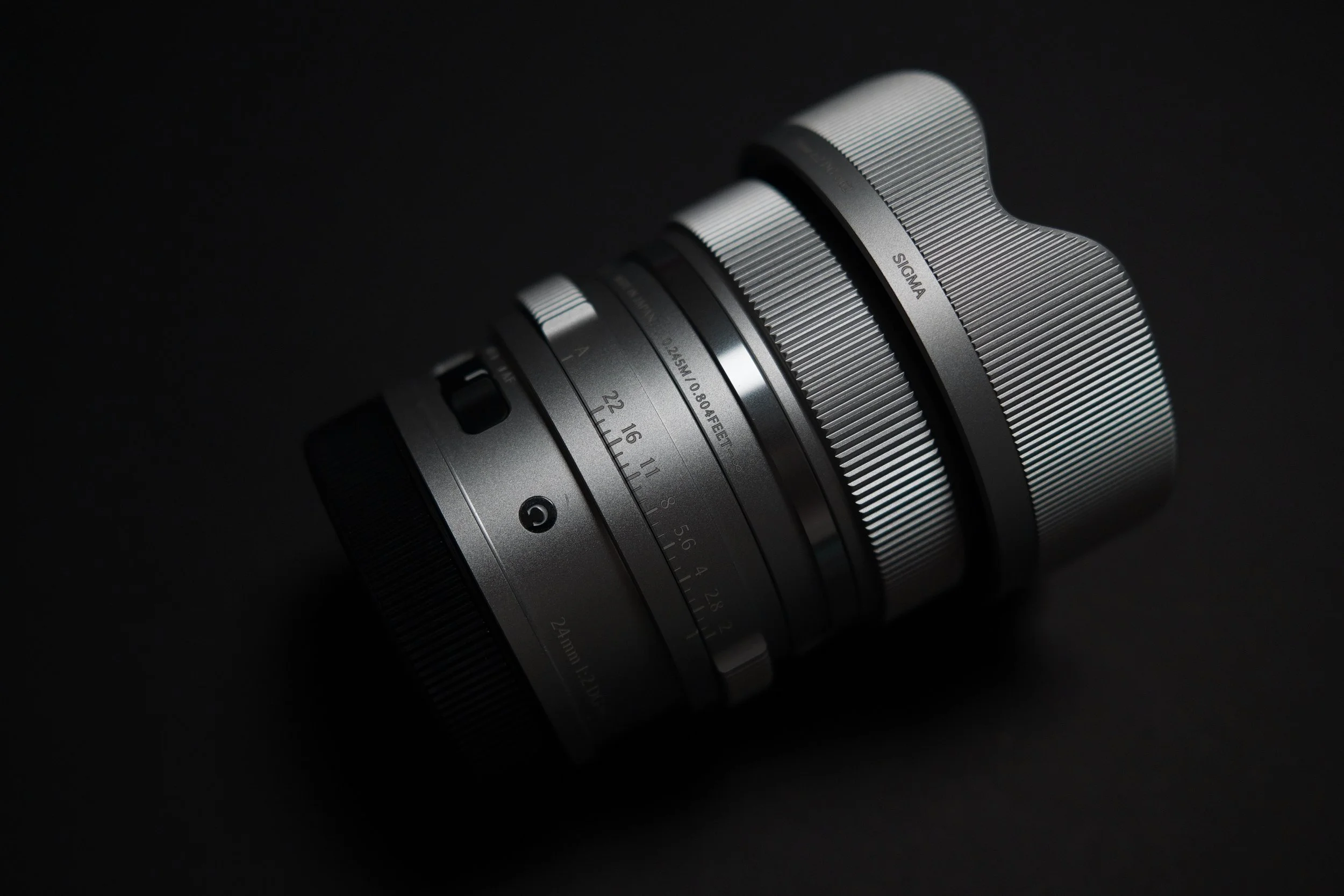
The 24mm F2: A Broader View
The Sigma 24mm F2 DG | Contemporary is naturally the widest of the three. It proved particularly well suited to architecture, interiors, urban landscapes and scenes in which I wanted to preserve a substantial sense of the surrounding environment. Its maximum aperture of F2 also makes it useful when the available light begins to fade.
Its optical design comprises 13 elements in 11 groups, with a nine-blade diaphragm. In its L-Mount version, it measures 70 × 72 mm, weighs 365 grams and accepts 62 mm filters. Its minimum focusing distance is 24.5 cm, with a maximum reproduction ratio of 1:6.7.
Despite its wide angle of view, it remains naturally balanced on the BF. It is the largest of the three lenses, but never turns the combination into an unwieldy system. It was the lens I instinctively selected when I wanted to convey a particular atmosphere, place a subject within its surroundings or work in the narrow streets of the European cities I visited.
The 35mm F2: The Everyday Focal Length
The Sigma 35mm F2 DG | Contemporary is probably the most versatile of the three. Its focal length retains enough context around the subject without giving the image the more dramatic appearance of a wider-angle lens. For street photography, everyday documentary work or travel scenes, it is perhaps the most obvious companion for the BF.
Its optical construction consists of ten elements in nine groups, and it features a nine-blade rounded diaphragm. In L-Mount, it measures 70 × 65.4 mm and weighs 325 grams. Its minimum focusing distance is 27 cm, its maximum reproduction ratio is 1:5.7 and its filter diameter is 58 mm.
It is wide enough to photograph a scene without having to step backwards constantly, yet neutral enough not to impose a particular aesthetic on the image. It suits the BF’s purpose perfectly: to observe, compose and photograph without turning each exposure into a technical demonstration.
The 45mm F2.8: The Smallest and Perhaps the Most Endearing
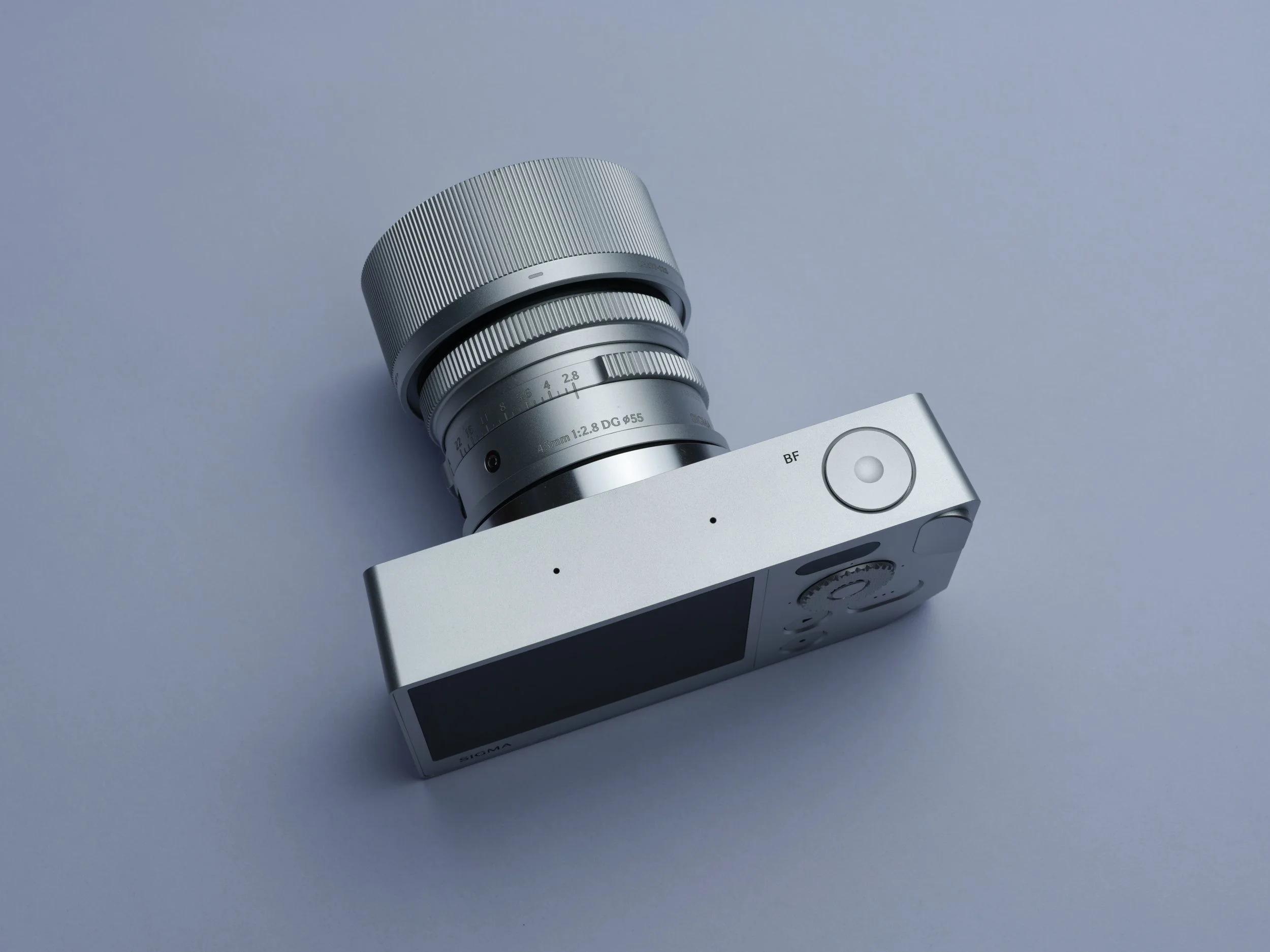
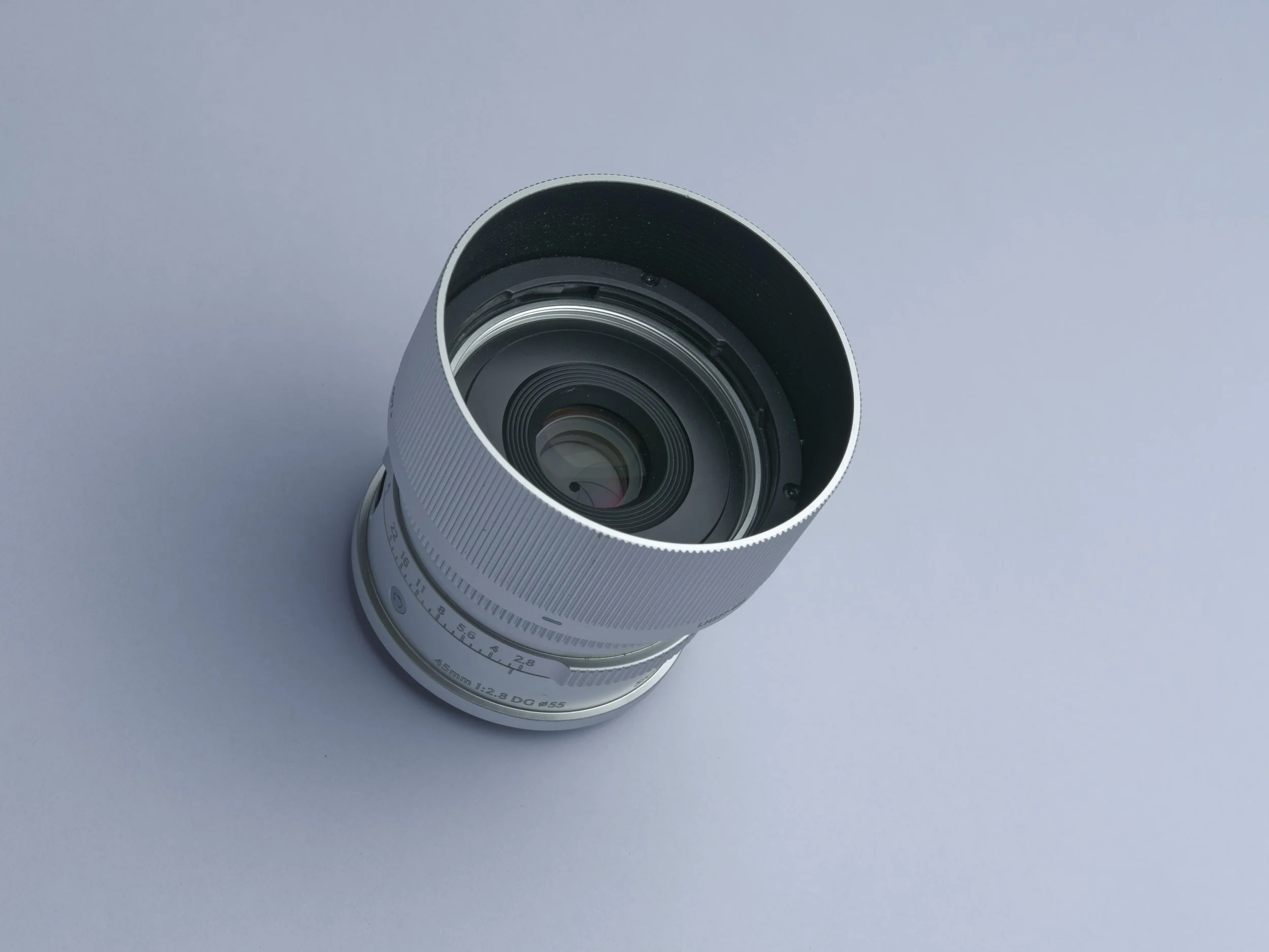
The Sigma 45mm F2.8 DG | Contemporary is the smallest and lightest lens of the trio. At 220 grams and just 46.2 mm long in its L-Mount version, it creates an especially compact combination with the BF. Its focal length is slightly wider than a traditional 50mm lens, offering a natural perspective while retaining a little more of the surrounding environment.
Its optical design comprises eight elements in seven groups. It has a seven-blade rounded diaphragm, a minimum focusing distance of 24 cm and a maximum reproduction ratio of 1:4, which is particularly useful when photographing details or small objects. The lens has a diameter of 64 mm and accepts 55 mm filters. Sigma has paid particular attention to its rendering at maximum aperture, producing a relatively soft, gradual transition into blur, while the image becomes more incisive as the lens is stopped down.
Its minimum focusing distance and angle of view make it comfortable to use without introducing the perspective distortion associated with a shorter focal length. It is also the lens one forgets most easily is attached to the camera, such is its compactness.
The Inspired Detail of the Magnetic Lens Cap
All three lenses are supplied with a magnetic metal lens cap in addition to a conventional plastic one. The idea is as simple as it is inspired: the cap naturally finds its position against the front of the lens, without requiring the user to pinch two tabs or carefully align it. Sigma itself presents the cap as the finishing touch to the I-Series.
In practice, it contributes greatly to the pleasure of using the lenses. The gesture is precise, the feel of the metal is satisfying, and the quiet click as the cap settles into place reinforces the impression of handling an exceptionally well-designed object.
There is, however, one minor limitation. When the lens hood is fitted, the cap becomes more difficult to grasp. There is less space for your fingers, and removing it can require a little more effort than one might like. It is hardly a serious problem, but the elegance of the solution does lose some of its immediacy.
Yet this detail perfectly encapsulates the philosophy of the system. The magnetic cap does not improve image resolution or autofocus performance. It simply makes the object more pleasurable to own and use. This is precisely where the BF’s sartorial spirit reappears: in the attention paid to small elements that are not essential, but which complete a unique concept.
The camera and the three lenses do not merely feel like a coherent photographic system. They form an ensemble designed down to the way it is seen, touched and handled.
Three Buttons, One Dial and Almost Nothing Else
The back of the camera is striking in its restraint.
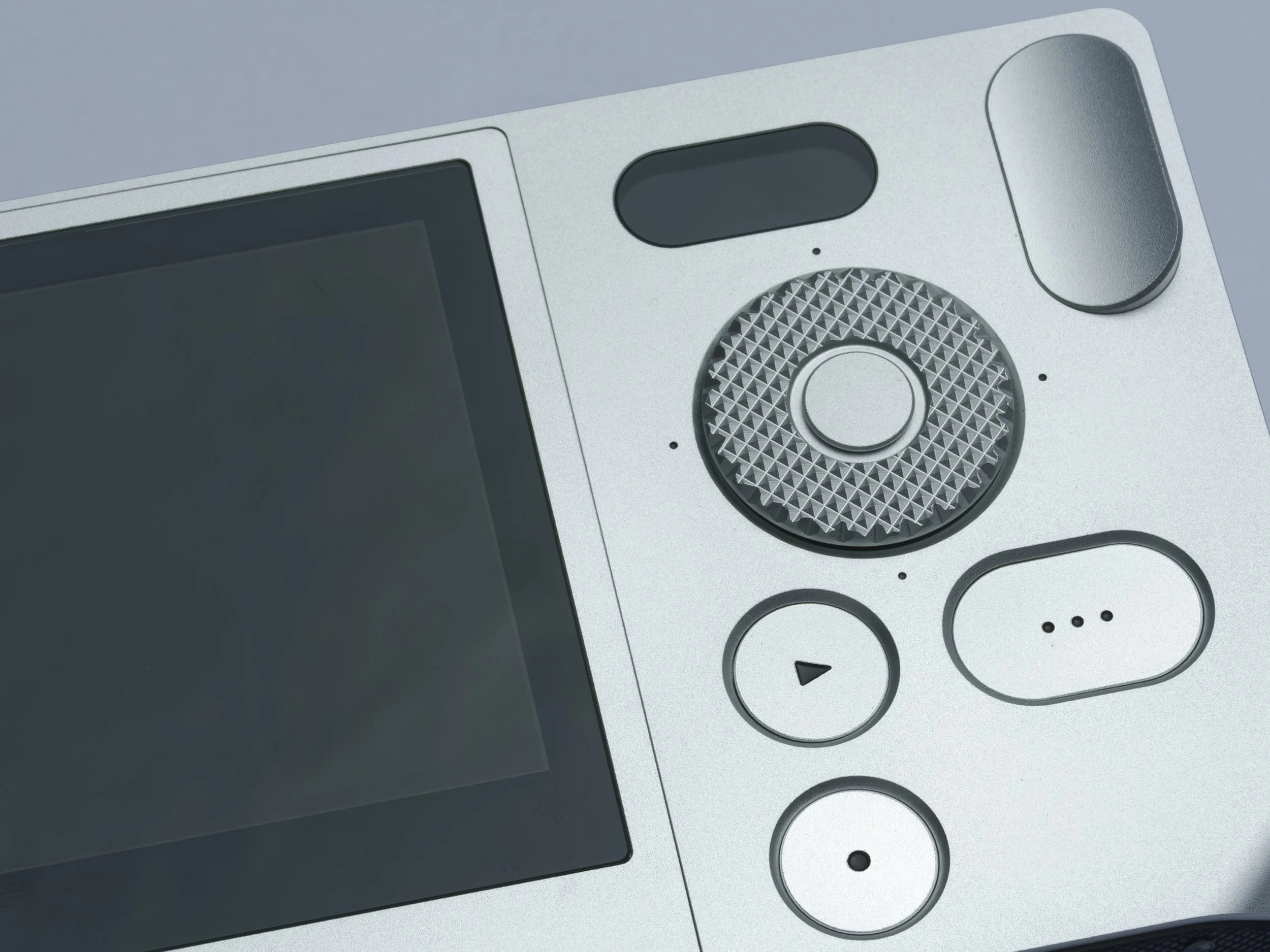
Beside the touchscreen are a small status display, a circular dial that also serves as a directional pad, a central button, an options button and a playback control. The shutter button sits on the top plate, while the power button is positioned on the rear.
The principal controls use pressure-sensitive haptic technology. They do not have the physical travel of conventional buttons, but they provide a clear tactile response when pressed. Sigma has therefore reduced the interface to three primary buttons and a directional dial without making the controls feel vague or unreliable.
In use, I found their positioning particularly successful. I experienced neither accidental inputs nor controls that failed to respond. The buttons always fell naturally beneath my fingers, and their haptic feedback remained consistent throughout the month.
The small status display is, in my view, one of the BF’s best ideas. It indicates the parameter currently being adjusted with the dial, allowing the main screen to remain as uncluttered as possible. Rather than covering the image with a multitude of icons, Sigma separates composition from technical information.
A Menu Built Around Five Essential Parameters
The BF does not use a traditional PASM mode dial. Instead, Sigma provides direct access to the five parameters it considers essential: shutter speed, aperture, ISO sensitivity, exposure compensation and colour mode.
The principle is extremely simple. Shutter speed, aperture and ISO can each be set independently to automatic or manual control. Their combination naturally recreates the familiar exposure modes: program, aperture priority, shutter priority or fully manual exposure. There is therefore no need to select a shooting mode in advance. You simply tell the camera which parameters you want to control and which ones you are prepared to delegate.
The main menu contains the settings directly associated with shooting: drive mode, recording format, aspect ratio and crop, autofocus mode, white balance, exposure and colour rendering. In video mode, resolution, frame rate and electronic stabilisation are among the additional options.
An options menu then groups together behavioural and display settings, while the system menu contains the more administrative functions: internal storage management, firmware information, copyright details, optical corrections, date, language and settings backup. The organisation remains concise and readable, without the dozens of tabs and subpages found in some professional cameras.
Overall, I greatly appreciated this simplicity. Once I had selected my settings, I could almost forget about the camera entirely. In most situations, the dial allowed me to control my exposure directly while the BF handled everything else. That division of labour suits me perfectly.
It captures the essence of this camera: simple and beautiful.



Everything the BF Has Chosen Not to Offer
That simplicity inevitably involves compromise.
The Sigma BF has no electronic viewfinder. Its screen is fixed. There is no SD card slot, no mechanical shutter and no in-body image stabilisation for still photography. The integrated electronic stabilisation applies to video; for stills, one must rely on technique, an appropriate shutter speed or the optical stabilisation of a compatible lens.
These are not omissions buried deep within a specification sheet. They are fundamental design decisions.
They must therefore be accepted before one even considers buying the camera. A photographer who needs a viewfinder, multiple storage media, immediate file redundancy or built-in stabilisation should not expect to turn the BF into something it was never intended to be.
For my part, I would not consider it my primary camera for every professional assignment. It lacks certain safeguards and aspects of versatility that are essential in situations where there is no room for uncertainty. As a supplementary camera, an everyday companion or a tool for rediscovering a more spontaneous approach to photography, however, its proposition becomes far more convincing.
230GB of Storage, but No SD Card
Instead of a memory-card slot, the BF contains approximately 230GB of internal storage. According to Sigma, that is sufficient for more than 14,000 JPEG files, around 4,300 losslessly compressed RAW images or nearly two and a half hours of video at the highest quality setting. The USB-C port is used for charging, file transfer and backup to an external USB storage device.
This choice requires a slight adjustment in habit. At the end of the day, there is no card to remove: the camera is connected directly to a computer or external drive. In return, I never had to wonder which card was installed, whether it was fast enough or whether enough space remained to continue shooting.
In use, both start-up and wake-up from standby proved remarkably fast. The camera feels almost immediately available when you want to photograph something. That detail is essential for a camera whose purpose is precisely to capture everyday life without turning each image into a technical operation.

Battery Life That Makes a Second Battery Essential
The battery is nevertheless one of the product’s weaker points.
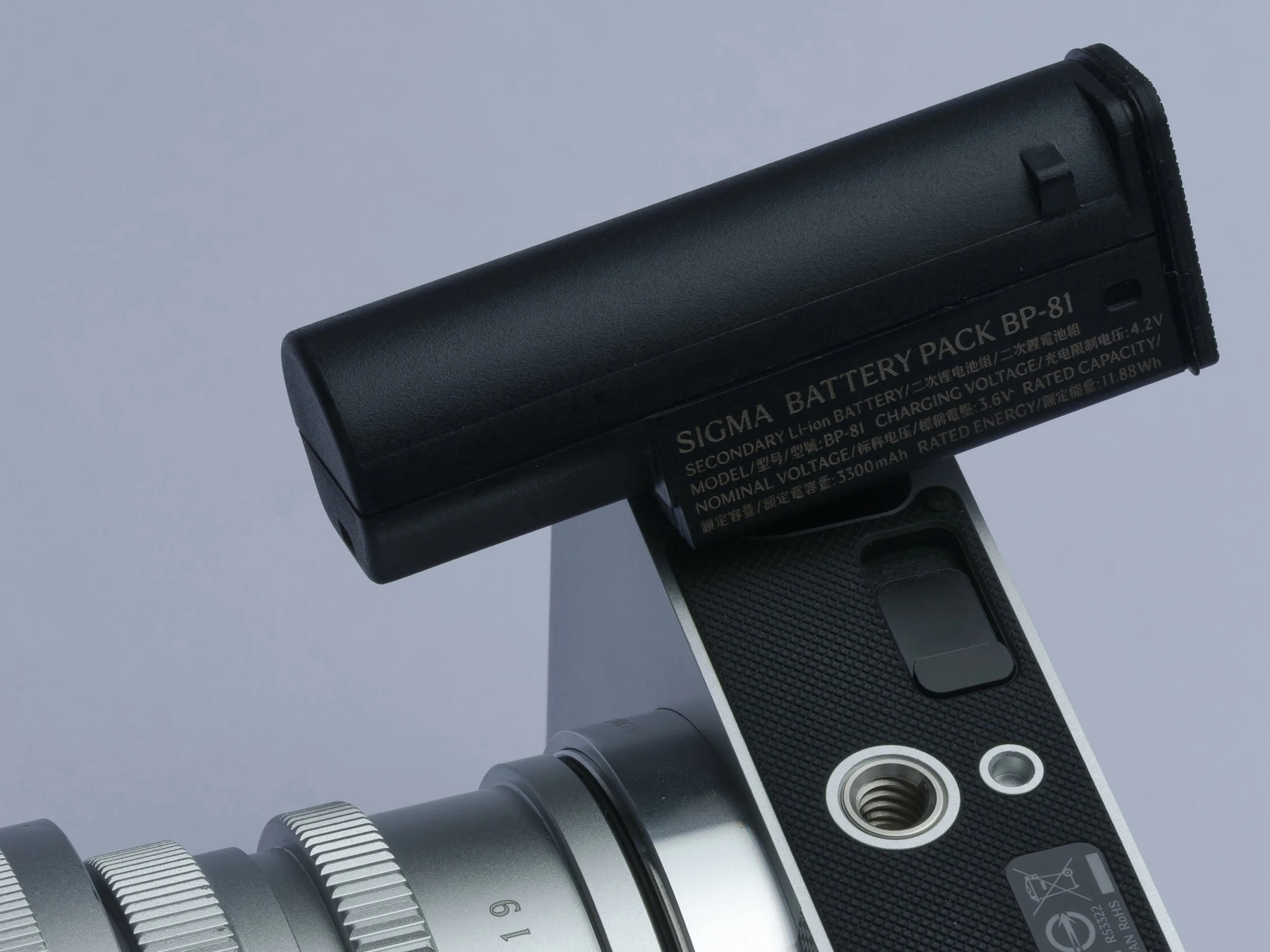
Sigma rates the BF for approximately 260 images per charge or around 60 minutes of continuous video recording. Such figures never tell the whole story of real-world use, but they confirm an impression that becomes apparent fairly quickly: the BF is relatively power-hungry.
Once you have a second battery with you, however, the issue largely disappears. I never experienced the battery life as a serious obstacle, merely as something that had to be anticipated. You need to check the charge before leaving and keep a spare battery within easy reach.
I must also admit that I nearly always carry several batteries, including when I use my other cameras. The BF therefore simply enforces a little more firmly a discipline that every travelling photographer should already understand.
The battery can be charged directly inside the camera via USB-C. An external charger is also available as an optional accessory and quickly becomes worthwhile when using multiple batteries.
The Screen: The Real Weakness
The greatest weakness of the Sigma BF is, in my view, its screen.
Its resolution is excellent. It is a 3.15-inch touchscreen with approximately 2.1 million dots and close to 100 per cent coverage. Under favourable conditions, the image is crisp, detailed and very pleasant to view.
The problem is not its resolution, but its brightness.
In very sunny conditions, the screen does not always allow you to work as comfortably as you would like. And over the past few weeks, there has certainly been no shortage of sunshine. In Paris and on the Atlantic coast, I regularly had to change my viewing angle, use my body to shade the display or bring the camera closer in order to see the scene properly.
I always found a way to see what I was photographing. I therefore cannot claim that the screen prevented me from making an image. Even at maximum brightness, however, it is not quite bright enough to make the experience genuinely comfortable in direct sunlight.
The lack of articulation would be easier to accept if the panel remained perfectly legible from different angles and under every kind of lighting. In this respect, the BF reveals its limitations.
For a possible second generation, one could imagine a screen that remains perfectly integrated into the body but releases slightly when pressure is applied to its surface—rather like clicking a trackpad. It could then tilt without requiring a permanently visible hinge that might disturb the purity of the camera’s lines.
Perhaps an idea for a second-generation Sigma BF?




Fast, Confidence-Inspiring Autofocus
In almost every other respect, my criticisms are far more limited.
The BF uses a hybrid autofocus system combining phase and contrast detection, with subject tracking and recognition of people and animals. In the field, the system proved both fast and accurate.
I rarely encountered focusing problems. The camera locked on to subjects quickly, including in street scenes where I needed to compose and release the shutter without preparation. It also proved sufficiently dependable in lower light and during my night photography.
That efficiency is fundamental. A camera this minimalist would immediately lose its appeal if it forced the user to check focus constantly or navigate through complex focusing options. Here, the autofocus supports the overall philosophy: it does its job and then disappears from your attention.
Image Quality Worthy of the Object
The 24.6-megapixel full-frame sensor offers a sensible balance between resolution, file size and low-light performance. RAW files are recorded as losslessly compressed 14-bit DNGs, making them easy to integrate into most existing workflows.
Digital noise also appeared well controlled in darker environments and during night photography. Up to approximately ISO 5,000, I encountered no particular issues in the context of my own use. At higher sensitivities, software such as DxO PhotoLab can generally clean up the files very effectively when necessary.
I am not attempting to establish an absolute ISO limit. The perception of noise always depends on the scene, the exposure, the processing and the image’s final purpose. The BF is certainly not a camera that should be reserved exclusively for bright, sunny days. Its sensor retains a welcome degree of flexibility as the light fades.
The quality of the accompanying lenses naturally contributes greatly to the result. With a coherent combination, the images deliver the level of detail, depth and precision one expects from a modern full-frame sensor.
JPEGs Designed for HDR Displays
Another aspect of the BF deserves particular attention: its JPEG files support HDR display through an HDR Gain Map. The principle involves adding an extra map to the image that tells compatible devices how to extend its brightness and dynamic range. Sigma officially confirms that JPEGs produced by the BF support HDR Gain Maps.
On a compatible display or within a compatible application, highlights can therefore be reproduced with greater intensity than on a conventional SDR screen. This is not simply a matter of artificially increasing the contrast of the entire image. Bright areas genuinely receive more display latitude, giving greater brilliance to reflections, light sources, skies and night scenes.
The effect is particularly noticeable when the images are viewed on a recent device with an HDR-capable display, such as a compatible iPhone. The photographs then appear brighter and more vivid, with a visual dynamic range that cannot be fully reproduced on an SDR monitor. Apple supports gain-map-based HDR images within its display technologies, provided that the device and application being used are capable of interpreting the relevant data.
This compatibility does not compromise conventional viewing. On a screen or in software without HDR support, the JPEG continues to display normally. The gain map therefore acts as an additional layer: it enhances the experience on compatible equipment without making the image unusable elsewhere.
This choice is particularly consistent with the BF’s philosophy. The camera simplifies the process of taking photographs without rejecting contemporary technologies that can directly improve the visual experience. Its camera-generated JPEGs are therefore not merely quick previews or files intended for social media. On the right display, they reveal an additional dimension to the image.
Colour Modes as an Extension of the Photographic Experience
The BF offers thirteen colour modes, ranging from relatively neutral renderings to more pronounced interpretations: Standard, Rich, Calm, Powder Blue, Warm Gold, Teal and Orange, FOV Classic Blue, FOV Classic Yellow, Forest Green, Sunset Red, Cinema, 709 Look and Monochrome.
These modes are not buried deep within a menu. Sigma places them on the same level as shutter speed, aperture, ISO and exposure compensation. That positioning says a great deal about the BF’s design philosophy: the final rendering is part of taking the photograph, rather than an operation that must necessarily be postponed until post-production.
Naturally, one can work in RAW and retain complete freedom for later processing. But the camera also encourages the photographer to choose a colour intention at the moment of capture, and then to accept that decision. Once again, its objective is not so much to multiply possibilities as to foster a more direct relationship with the image.
Not a Main Camera, but a True Photographer’s Camera
The Sigma BF is clearly not destined to become my main camera.
Its lack of a viewfinder, the difficulty of viewing its screen in direct sunlight, its limited battery life and several radical design decisions restrict its versatility. For an extended professional assignment, a shoot requiring immediate file redundancy or highly technical work, I would continue to favour a more conventional system.
But it would be unfair to judge the BF solely by what it does not do.
This small gem succeeds in its central ambition: to make photography a pleasure for both the eye and the hand. It makes you want to go outside, observe and press the shutter. It does not turn every photograph into a technological demonstration, nor does it ask the user to spend an entire evening customising dozens of functions.
You simply select your parameters, allow the camera to manage what you have entrusted to it, and look at the world.
The Sigma BF is not trying to be the best camera for everyone. It is attempting to become an especially desirable camera for certain photographers. Those who want a universal machine will quite rightly criticise its omissions. Those who appreciate distinctive objects, deliberate simplicity and the physical pleasure of making photographs may, by contrast, be willing to forgive it a great deal.
Paired with the 24mm, 35mm and 45mm lenses from the I-Series, the BF forms a system of rare coherence. From the aperture rings to the magnetic metal lens caps, every detail reminds us that Sigma did not merely set out to create a capable camera and a range of capable lenses, but objects that are a pleasure to look at, touch and, above all, use.
After a month with the BF—from Paris to Vienna, from Munich to the French Atlantic coast—one thought remains above all others: very few cameras make you want to pick them up quite so much.
And fewer still make you want to take photographs before they have even been switched on.